Every high-stakes environment—from the corporate boardroom and the trading floor to the diagnostic lab—is fundamentally governed by decisions. And the unfortunate truth is that human decision-making is often slow, susceptible to pressure, and inherently flawed by psychological bias. Today's complexity is defined by data volume; we have access to more information than ever before, but we lack the mental bandwidth to synthesize it all effectively. Advanced computational systems—the technology we often group under the umbrella of smart solutions—are rapidly becoming the essential partner in this process.
Eliminating the Cognitive Fog: Synthesis and Speed
The first great service these intelligent systems provide is clearing the cognitive fog that comes with information overload. Human analysts struggle to read 500 pages of reports; a computational system thrives on it.
Data Synthesis at Scale
When faced with a complex decision—like whether to enter a new market or launch a new product—the input data is massive and unstructured: market reports, competitor analysis, customer feedback logs, and historical sales trends.
Condensation and Highlighting: The system ingests this sprawl and instantly synthesizes it. It doesn't just summarize; it identifies conflicting data points, extracts key arguments, and highlights anomalies that demand the human decision-maker's attention. This saves days or weeks of manual review, allowing leaders to focus their limited time on analyzing the synthesized information, not collecting it.
Real-Time Context: In environments like financial trading or logistics, decisions must be made in milliseconds. Computational models process real-time streams of sensor data, market fluctuations, and supply chain signals instantly, providing an up-to-the-second operational picture that human teams couldn't possibly track simultaneously.
The Power of Simulation
When the stakes are high, you cannot afford to guess. Advanced systems excel at running millions of complex, dynamic scenarios, a process known as simulation. For instance, before a logistics company commits to a new shipping route, the system runs models simulating every variable—weather delays, fuel costs, traffic patterns, and potential breakdowns—to provide a clear, risk-weighted optimization strategy. This allows the human to choose a path with minimal uncertainty.
Mitigating the Human Flaw: Bias and Heuristics
The second, and arguably most critical, role of intelligent systems is neutralizing the inevitable psychological traps that plague human judgment. We rely on mental shortcuts (heuristics) that often lead to predictable, suboptimal, and biased outcomes.
Attacking Cognitive Bias
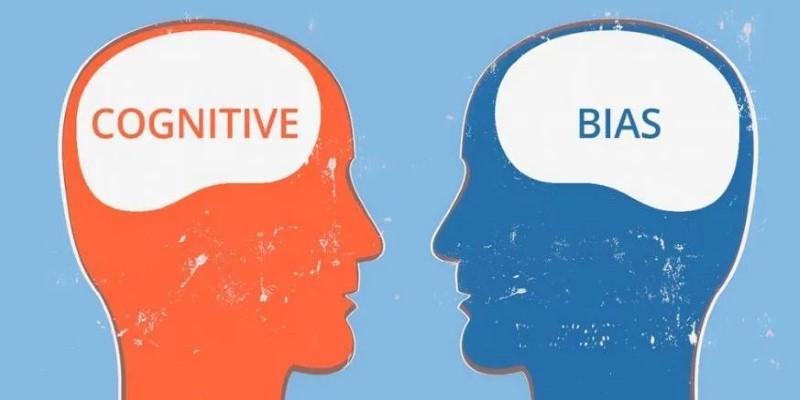
Confirmation Bias: Humans tend to search for information that confirms their existing beliefs. A computational system, however, performs an objective sweep of all available data, highlighting contradictory evidence and forcing the human decision-maker to confront facts that challenge their assumptions.
Anchoring Bias: Humans often fixate on the first piece of information presented. The system, through its synthesis and predictive modeling, can provide a range of objective benchmarks, forcing the human to consider a neutral, data-derived range of outcomes instead of just the initial anchor figure.
Recency Bias: Leaders often over-weight the most recent, emotionally charged events. The system filters this noise, placing equal statistical weight on long-term historical data, ensuring the decision is based on the full chronological context, not just the latest disaster or success story.
Ensuring Fairness in High-Stakes Decisions
In areas like hiring, lending, or criminal justice, computational systems can be mandated to prioritize fairness. While they can inherit data bias, a well-governed system can be audited and tested to ensure that the criteria used for a decision are applied consistently and equally across all demographic groups. The system enforces objective standards, removing the subjective, gut-feeling judgment that often introduces unconscious human prejudice.
The Strategic Layer: Providing Predictive Certainty
The ultimate improvement in decision-making comes from moving beyond simple analysis to reliable foresight.
Predictive Forecasting
As discussed in prior contexts, predictive models transform uncertain choices into calculated risks. Whether it's predicting which equipment component will fail (predictive maintenance) or which market segment will respond best to a new product (predictive marketing), the system quantifies the risk and reward of every potential choice.
From "Maybe" to Probability: The system doesn't just say a client might default; it assigns a 95% probability of default if variables X, Y, and Z remain constant. This quantified risk assessment allows the human leader to allocate resources—time, money, or attention—with surgical precision.
Automated Triage and Pre-Decision
In environments where rapid decisions are necessary, the system performs an automated triage, handling the vast majority of routine, low-risk decisions instantly, allowing human experts to focus their limited bandwidth on the truly ambiguous or high-risk cases that require complex ethical and empathetic judgment. For example, a network security system handles 99% of simple malware alerts automatically, alerting the human team only when a novel, sophisticated intrusion is detected.
The Final Check: The Human Mandate
Crucially, the power of computational systems only enhances decision-making when the final ethical and strategic authority remains firmly in human hands. The system provides the evidence and the forecast, but the human provides the wisdom, empathy, and ethical judgment.
The danger lies not in the technology, but in blindly accepting its output. The systems lack the capacity for empathy, understanding of social context, or ethical calculus. They can optimize a logistics route based on speed, but they cannot weigh the ethical cost of displacing a local community.
This dynamic mandates a strict Human-in-the-Loop policy for all high-stakes decisions. The human role evolves from being the primary data processor to becoming the ultimate arbiter of values, ensuring the statistically optimized decision aligns with the organization's moral and strategic mission.
Conclusion
The integration of advanced computational systems represents the single greatest leap in decision support technology since the advent of the spreadsheet. By systematically eliminating the cognitive strain of data synthesis, neutralizing inherent human biases, and providing quantified predictive certainty, these tools transform ambiguous, high-stress choices into clear, evidence-based paths. This technology effectively creates a co-pilot relationship: the system handles the calculation, the scale, and the prediction, while the human leader retains the essential and irreplaceable mandate of providing ethical judgment, contextual wisdom, and final accountability. The future of effective leadership hinges entirely on mastering this powerful partnership.