Space exploration has always driven human innovation, and the next frontier in lunar exploration is computer vision. Historically, mapping craters on the moon was a tedious and inaccurate manual process. Now, AI can perform this task with greater precision, which helps in planning safer landing sites and future lunar bases. It also provides insights into the moon's geological history. This advancement significantly enhances our ability to understand and utilize the Moon.
Why Lunar Craters Matter

Craters are not simple features on the surface of the Moon that are interesting. They are geological books which inform us of billion-year-old galactic collisions. And in every single crater of impact there are hints to the age of the moon surface and the rate of asteroid collision and even the elements which made these objects strike upon our moonly neighbor through the ages.
Knowledge of craters distribution also comes in handy. Spatial mapping of craters is required to determine safe landing areas of spaceships and rovers. Apparently flat plain may contain miniature craters/rocky terrain that may pose threatening to a mission. Proper crater identification assists mission planners to avoid all these hazards and choose the best areas to conduct exploration.
It is also possible to find valuable resources in craters. The presence of some permanently shadowed craters near the lunar poles has water ice- a valuable asset of the future human settlement. Precision in the identification of these characteristics may spell the difference between where humanity can set up a permanent base on the lunar surface.
The Challenge of Manual Crater Detection
Conventional techniques of crater recognition entailed physical researchers peering through high-resolution picture courtesy of lunar go-around missions through the eyes. Although this worked, it had some serious drawbacks.
It's time-intensive
The surface area of the Moon covers at least 38 million square kilometers and contains millions of craters of pockmarks up to huge impact craters. Actually recording even some fraction of these features by hand would require years.
Human analysis is inconsistent
Various scientists may disagree on whether a given depression is a crater and find it difficult to determine the precise limits of the boundary of the same. These subjective judgments might give rise to databases having different degrees of accuracy.
The data volume is overwhelming
With the advancement of imaging technology and the satellites taking more and more accurate pictures, it becomes impossible to process the amount of data that they provide without computerized processing. We are creating lunar pictures to an extent scientists are analyzing them in conventional ways.
How Computer Vision Detects Craters
Machine learning algorithms applied to computer vision systems have been trained on thousands of labeled crater images. These algorithms are trained to identify the features of craters as compared to other features in the moon, circle formations, high rims, dark areas, etcetera.
It usually starts with the preprocessing of images in order to increase contrast and eliminate noise. The algorithm then scans the image and determine patterns of pixels to find possible craters. State-of-the-art systems use deep learning neural networks which can identify craters in various lighting conditions, angles and sizes with remarkable accuracy.
One of them relies on the use of convolutional neural networks that are very powerful at identifying spatial patterns within the images. These networks operate in several layers with each layer extracting more complex features. Edges and curves could be identified at early levels, whereas crater full structures could be identified at depth levels.
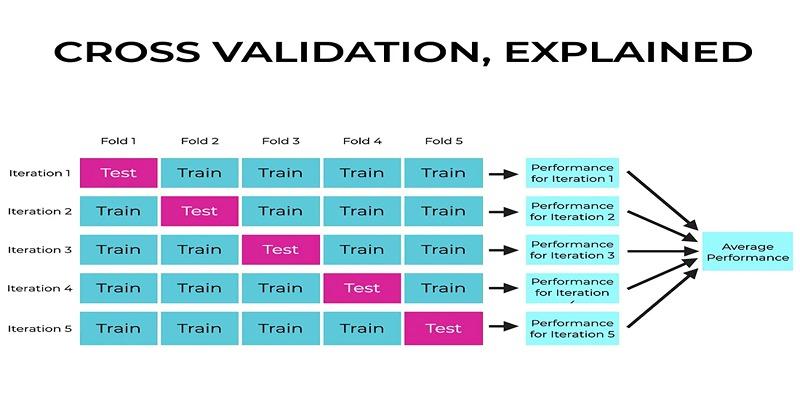
Their capacity to learn corrections makes these systems especially strong. When the identifications of the algorithm are confirmed or refuted by a scientist, the system takes this into account by enhancing future identifications. The model becomes more accurate and reliable with time.
Real-World Applications and Results
Computer vision systems have been applied successfully by NASA and various other space organizations and research centers to detect lunar craters.
The Lunar Reconnaissance Orbiter Camera at NASA has been taking high-resolution photos of the surface of the moon totaling millions. Scientists have come up with automated systems which are capable of processing these images and detecting craters with a high level of accuracy of over 90 percent in larger craters. It is this efficiency which has made it possible to create all inclusive crater databases that would otherwise have required decades to be compiled manually.
Computer vision has also been used in mission planning in the lunar exploration programme of china. Precise mapping of hazards and terrain morphology using automated crater detections prior to the landing of the Chang'e missions on the moon was a process that identified suitable landing points.
In addition to detection, computer vision assists scientists in studying crater features in large scale. The depths, degradation, and diameter of craters across whole regions of the moon can be measured automatically through the use of algorithms. Such information displays tendencies regarding the frequency of impacts throughout geologic time and enables scientists to know the history of the evolution of the Moon.
Challenges and Future Developments
The use of computer vision in crater detection is still problematic despite its remarkable advance. Streaked craters, hardlight, and degradations may disorient algorithms. Even very small craters are hard to pick and only a complex analysis will help to differentiate between a true crater and a crater-like feature.
To overcome these shortcomings, researchers are dealing with it in a number of ways. Multi-scale detectors can use images of various resolutions in order to detect small and large features. Ensemble techniques consist of many algorithms, with each working on the weaknesses of the other. The method of training transfer learning involves the use of the acquired knowledge about the detection of lunar craters to detect features in other satellites such as Mars or Mercury.
The second breakthrough is with regards to detecting craters in real-time by spacecrafts. In place of transmitting images back to the Earth to be processed, these future missions would be able to conduct their own analyzes of terrain as they orbit or land. This would allow spacecrafts to make split-second decisions on safe landing spots or to maneuver around unsafe areas without action taken by the ground control unit.
Expanding Beyond the Moon

The techniques developed for lunar crater detection have applications far beyond our nearest neighbor. Mars, with its heavily cratered southern highlands, presents similar challenges for mission planning. Automated crater detection could help identify ancient lake beds or areas of scientific interest on the Red Planet.
Asteroids and moons throughout our solar system also display crater-scarred surfaces. As we plan missions to explore these distant worlds, computer vision will play a crucial role in understanding their geology and identifying landing sites.
Final Thoughts
Computer vision is revolutionizing planetary science and space exploration. Automating analysis frees scientists for deeper discovery. Crucial for renewed lunar exploration, it enables accurate terrain mapping, resource identification, habitat planning, and astronaut safety. Evolving from simple crater detection, this technology is vital for comprehensive lunar mapping, supporting humanity's return to the Moon. The promising fusion of AI and space exploration unveils the Moon's ancient secrets, pixel by pixel.