Why Bigger Models No Longer Settle Everything
For years, improving AI seemed to follow a straightforward formula: build a model with more parameters, train it on more data, and expect stronger results. That approach still works for some demanding tasks, but it no longer answers the questions that matter in daily use. A model may be impressive in testing yet remain slow, expensive, inconsistent, or poorly connected to the information and tools people rely on.
The practical choice is therefore less simple than “bigger is better.” Larger models can improve reasoning, language understanding, and flexibility, but each gain may require substantially more computing capacity and operating cost. Better retrieval, tool use, data quality, evaluation, and deployment can sometimes produce greater value without increasing model size. The important question is not only how capable the model is in isolation, but how effectively the complete system performs its intended job.
What More Parameters Actually Buy You
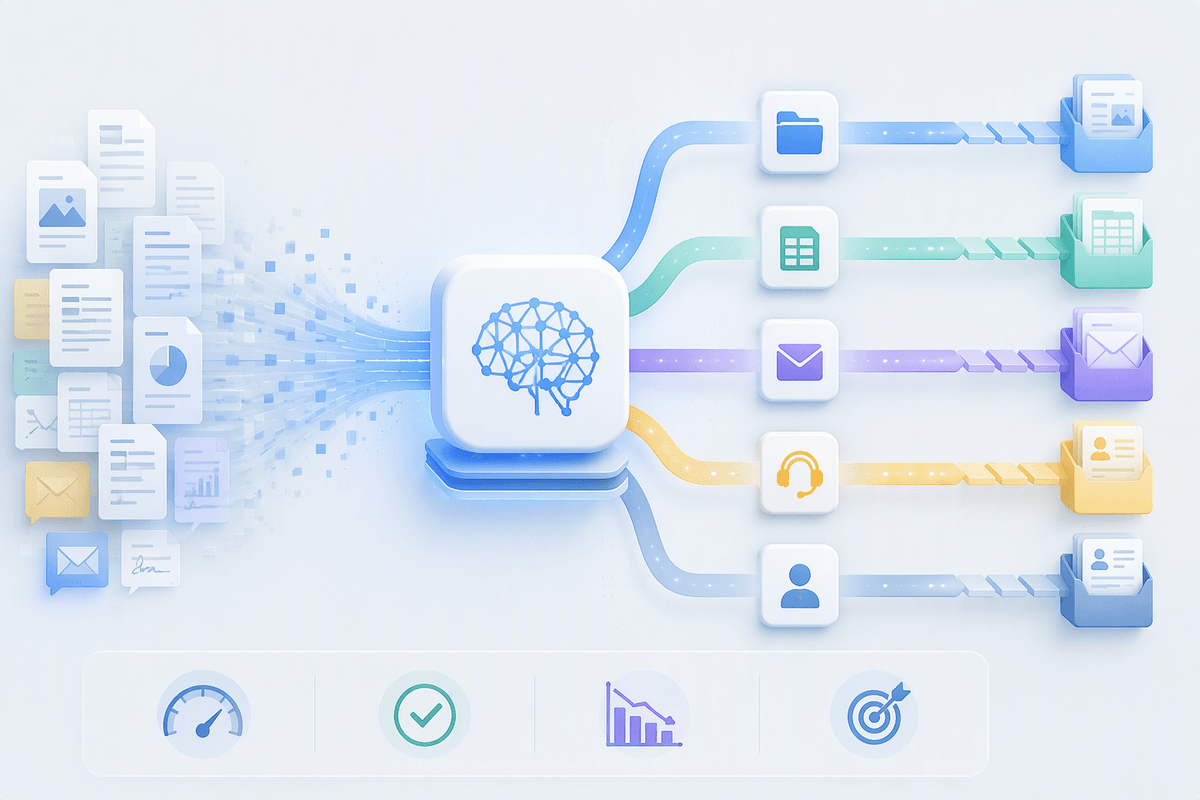
More parameters primarily buy breadth. A larger model can represent more patterns, handle a wider range of instructions, and maintain better performance when a request combines several difficult tasks. It may also need fewer carefully engineered prompts because its training has exposed it to more examples of useful reasoning, writing, coding, and domain-specific language. That flexibility matters when users ask unexpected questions rather than choosing from a narrow set of predefined workflows.
The gains are not uniform, however. Larger models can still produce confident errors, misunderstand specialized requirements, or struggle with information that changed after training. They also demand more memory, compute, and time for each response, which can raise costs or make interactive applications feel slow. In some cases, the extra capability is wasted: a customer-support classifier, document extractor, or routing system may need consistency and speed more than open-ended reasoning. Model size is therefore most valuable when the task is broad, ambiguous, or difficult to solve through fixed rules and external tools alone.
The System Around the Model Changes Results
A model’s answer often depends as much on its surroundings as on its internal capability. Give it current, well-organized company data through retrieval, and it may answer a policy question more accurately than a larger model working from memory. Connect it to a calculator, database, code interpreter, or workflow tool, and the system can verify facts or take actions instead of merely describing them. Clear instructions, structured inputs, and carefully chosen context can also reduce ambiguity before the model begins generating a response.
These improvements shift effort from training alone to system design. Teams must decide which sources are trustworthy, how often information should be updated, what the model is allowed to access, and when a human should review the result. Testing must cover more than answer quality: latency, failure recovery, privacy, security, and cost matter in production. Retrieval can return irrelevant documents, tools can fail, and complex orchestration can become difficult to maintain. Still, a smaller model embedded in a reliable workflow may deliver more useful outcomes than a larger model given a vague prompt and no connection to the information or actions the job requires.
A Smaller Model Can Win the Real-World Test
Consider an internal support assistant that answers questions about benefits, security procedures, and software access. A larger general-purpose model may write more polished responses, but a smaller model connected to current policy documents, employee records, and a ticketing system can be more useful. It can cite the relevant rule, check whether the employee is eligible, open the correct request, and hand uncertain cases to a specialist. The result is not just a better answer; it is a completed task with fewer opportunities for misunderstanding.
This advantage becomes clearer when performance is measured across the whole workflow. A smaller model may respond faster, require less expensive hardware, and support more simultaneous users. Lower operating costs also make it practical to run more checks, retain human review, or serve occasional users who would not justify a premium model. The trade-off is reduced flexibility. If the request falls outside the designed workflow, the system may need escalation or may fail in ways a larger model could handle independently.
The real-world winner is therefore the system that meets its service target reliably, not the model that produces the most impressive demonstration. Accuracy, response time, maintainability, and cost often matter more than isolated benchmark scores.
Where Better Systems Still Hit Hard Limits
Better system design cannot remove every capability gap. If a task requires interpreting unfamiliar evidence, handling several competing goals, or adapting to an unexpected situation, a smaller model may simply lack the depth needed to respond well. Retrieval only helps when the right information exists and can be found. Tools improve calculation or execution, but they do not guarantee that the model will choose the right tool or understand its output. Adding more components can also introduce new failure points, from stale documents to broken integrations and confusing handoffs.
There is a practical ceiling to optimization. Teams may spend weeks refining prompts, evaluations, and routing logic, yet still see errors on rare cases that were not represented in testing. A heavily engineered workflow can become expensive to maintain, especially as policies, data sources, and user needs change. Human review reduces risk but adds labor and slows response times. When the task is broad, novel, or difficult to specify in advance, increasing model capability may be simpler than building rules around every exception. Better systems often stretch a model’s usefulness, but they cannot fully substitute for underlying reasoning capacity.
When Scaling Models Remains the Better Choice

Scaling remains the better choice when the task cannot be narrowed without losing much of its value. A research assistant comparing unfamiliar papers, a coding agent working across a large repository, or a planning system balancing ambiguous constraints may encounter too many possible paths for a carefully designed workflow to cover. A more capable model can generalize across these situations, recover from incomplete instructions, and combine evidence without requiring a separate rule for every variation.
Higher capability also reduces engineering overhead in some settings. Instead of maintaining a large network of prompts, routers, validators, and exception handlers, a team may prefer one stronger model that handles a wider range of requests consistently. This can be especially important when demand is unpredictable or the cost of failure is high. The trade-off is substantial: larger models usually require more expensive infrastructure, create greater latency, and may still need retrieval, tools, and human oversight. Scaling is most justified when those costs are outweighed by the value of flexibility, difficult reasoning, or reduced system complexity.
The Practical Advantage May Come From Combining Both
The strongest practical strategy is often selective scaling: use a more capable model where ambiguity and reasoning matter, then surround it with retrieval, tools, validation, and workflow controls. A smaller model can handle routine classification, summarization, routing, or data extraction, while the larger model is reserved for difficult cases. This division keeps expensive computation focused on requests that benefit from it rather than treating every task as equally demanding.
That approach requires measurement rather than assumption. Teams should compare end-to-end accuracy, latency, operating cost, failure rates, and maintenance effort across realistic workloads. A hybrid system may be harder to design than a single-model solution, but it can offer a better balance between capability and efficiency. The practical advantage will come from matching model size and system support to each job, not from choosing one philosophy for every application.