Why AI Is Entering the Proof Arena
When a computer solves a familiar equation, few people call the result a mathematical discovery. The machine follows established procedures, and its success can be checked quickly. Proofs are different. They require a chain of reasoning that explains why a statement must be true, often across thousands of interlocking steps. That makes advanced mathematics an attractive test for AI: success demands more than producing an answer.
Recent systems can search enormous spaces of possible arguments, identify useful patterns, and sometimes translate their findings into formal proofs that software verifies line by line. This does not automatically mean they understand the ideas involved. A verified proof may still depend on exhausting possibilities rather than revealing a concept a mathematician can reuse. The important question, therefore, is not simply whether AI can prove theorems, but what kind of mathematical contribution its proofs represent.
What Makes a New Math Proof Difficult
A difficult proof is rarely difficult because the final statement is hard to read. The obstacle is finding the right route to it. A mathematician may need to choose useful definitions, discard attractive but unproductive approaches, and recognize that a problem belongs to a broader pattern. Those choices are not captured by simply testing many examples. A computer can confirm that a proposed result holds for millions of cases, but no finite number of tests establishes that it holds in every case.
AI systems face another challenge: mathematical search is full of dead ends. A promising-looking argument may rely on an unstated assumption, misuse a theorem, or become impossible to verify when its steps are expanded. Formal proof software can catch such errors, which makes verification valuable, but checking correctness is not the same as judging importance. A proof may be valid yet so long, specialized, or dependent on exhaustive computation that few mathematicians can see why it works.
The real test is therefore a combination of reliability and insight: can a machine produce an argument that is not only correct, but also intelligible, reusable, and connected to ideas beyond the original problem?
How Machines Search Where Humans Struggle
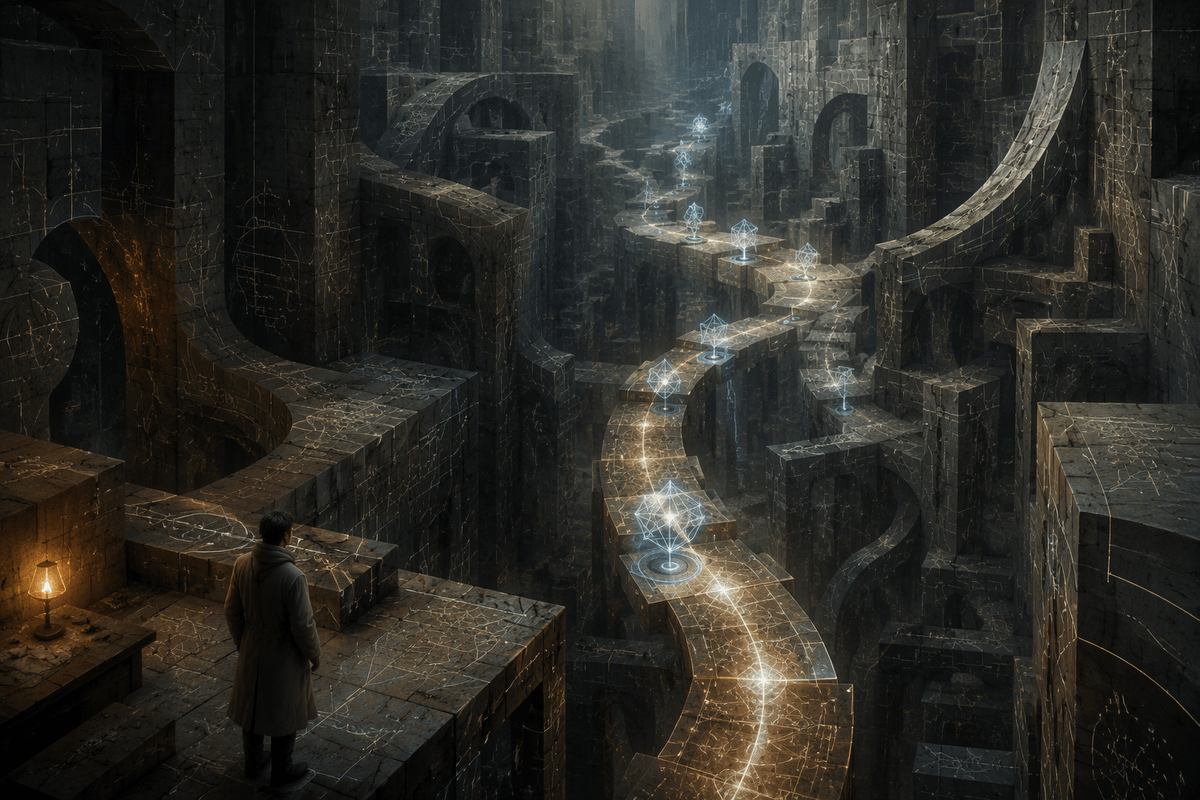
The machine approaches a hard proof differently from a human mathematician sitting with pencil and paper. It can generate and test vast numbers of possible moves: a new lemma, a change of variables, a carefully chosen example, or a connection to a known theorem. Systems trained on formal mathematics can also learn which moves tend to lead toward progress, then use search methods to focus on more promising branches instead of exploring every option equally.
This advantage matters when the useful path is too narrow or unfamiliar for ordinary trial and error. A program may notice a structural similarity across thousands of previous proofs, or find an intermediate statement that no one thought to try. Yet the process can still resemble an enormous, highly guided search rather than independent reasoning. Its strength depends on the quality of its training data, the language used to represent the problem, and the computing time available. A machine may uncover a valuable route, but a formal checker must still confirm every step. Only afterward can mathematicians decide whether the route expresses a general idea or merely succeeds through an expensive accumulation of cases.
The Contest Between Speed And Understanding
The difference becomes clearest when speed and understanding point in different directions. An AI system may locate a valid proof in minutes by testing thousands of constructions, while a human may need weeks to discover a short argument that explains the underlying pattern. The machine has won the race to certainty, but not necessarily the race to meaning. For researchers, that distinction affects whether the result can guide work on other problems or remains a one-time solution.
Verification makes the machine’s output trustworthy in a narrow but important sense: a formal checker can confirm that each permitted step follows from the previous ones. It cannot determine whether the chosen definitions are illuminating, whether the proof has a simpler form, or whether the result changes how mathematicians think about the subject. Those judgments require interpretation. They may also require substantial effort, because translating an opaque computer-generated argument into readable mathematics can take longer than checking it.
AI therefore shifts part of mathematical labor rather than eliminating it. Machines can supply speed, coverage, and resistance to routine error; mathematicians must still supply selection, explanation, and judgment about significance.
When A Verified Proof Still Falls Short
A formally verified proof can still disappoint when its reliability is easier to establish than its meaning. Consider a result supported by a computer checking millions of configurations. The conclusion may be beyond doubt, yet the proof may offer little guidance about why the pattern holds or where else it might appear. Its length can also create a practical barrier: mathematicians may need specialized software, substantial computing resources, and considerable time to inspect or reproduce the argument.
There is a further risk of confusing verification with discovery. A checker confirms that a proof follows from its starting assumptions and rules; it does not confirm that those assumptions capture the most useful way to frame the problem. Nor can it tell whether a shorter proof is possible, whether a hidden general principle is waiting to be found, or whether the result connects to an important body of mathematics. Machine-generated work becomes more valuable when humans can compress it into a clear explanation, identify the mechanism that made it succeed, and reuse that mechanism elsewhere. Without that step, AI may deliver certainty without understanding—a powerful result, but an incomplete mathematical contribution.
What AI Wins Actually Change
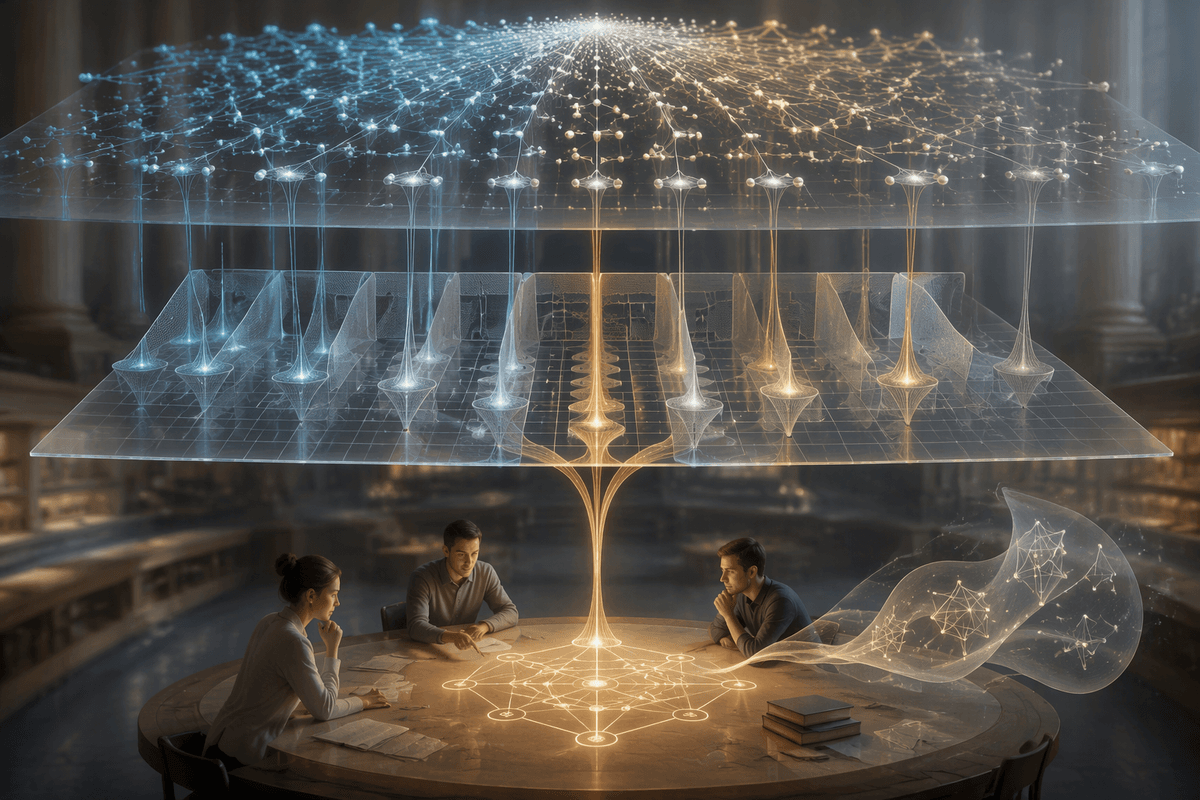
When an AI system wins a proof challenge, the immediate change is practical: mathematicians gain another way to explore difficult problems. A machine may test conjectures, suggest lemmas, or expose a counterexample before a researcher invests months in a particular direction. Even a proof that lacks elegance can narrow the search and reveal which assumptions matter. That makes AI useful as a research instrument, not merely as an automated student.
Mathematical progress may increasingly involve several layers of contribution: a machine finds a route, formal software verifies it, and humans decide how to explain and generalize it. This could expand access to problems that once demanded rare intuition, but it also raises costs. Reliable systems require specialized training data, computing power, and careful oversight, while opaque results may be difficult for other researchers to reproduce or teach. An AI victory therefore does not replace mathematical judgment. It changes where judgment is applied—from finding every step unaided to choosing promising questions, checking the machinery, and turning computational success into concepts that can travel beyond one theorem.
The Next Proof Partner May Be Hybrid
The most useful proof partner may not be a machine that replaces mathematicians, but one that divides the work differently. AI could search broadly, test unusual constructions, and produce a formally checkable draft. A mathematician could then identify the central idea, remove unnecessary machinery, and reshape the result into an argument others can understand and extend. This partnership would treat computation as a source of clues rather than a substitute for judgment.
Human researchers still need to audit the software, verify the assumptions, and decide whether the system’s search was broad enough to support the claim. Computing costs can also restrict who gets to use the most powerful tools. Even so, the standard for progress may gradually become hybrid: machines provide reliable reach through difficult possibilities, while mathematicians provide explanation, abstraction, and purpose. AI’s deepest contribution may be not proving everything alone, but making new forms of collaboration mathematically credible.